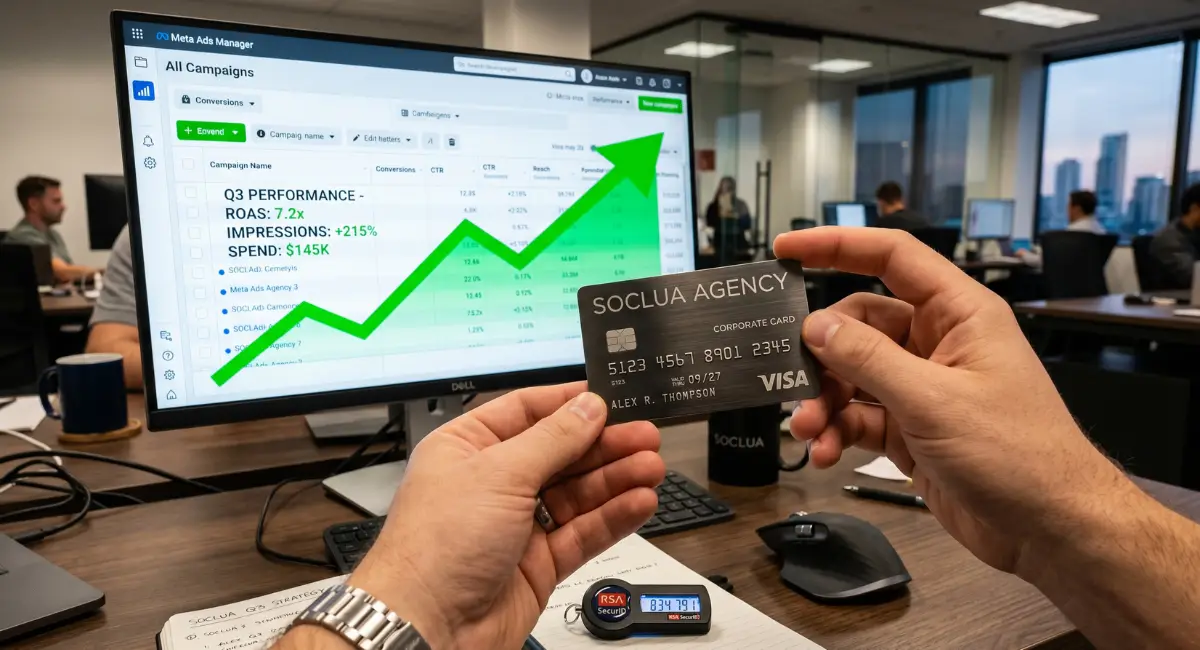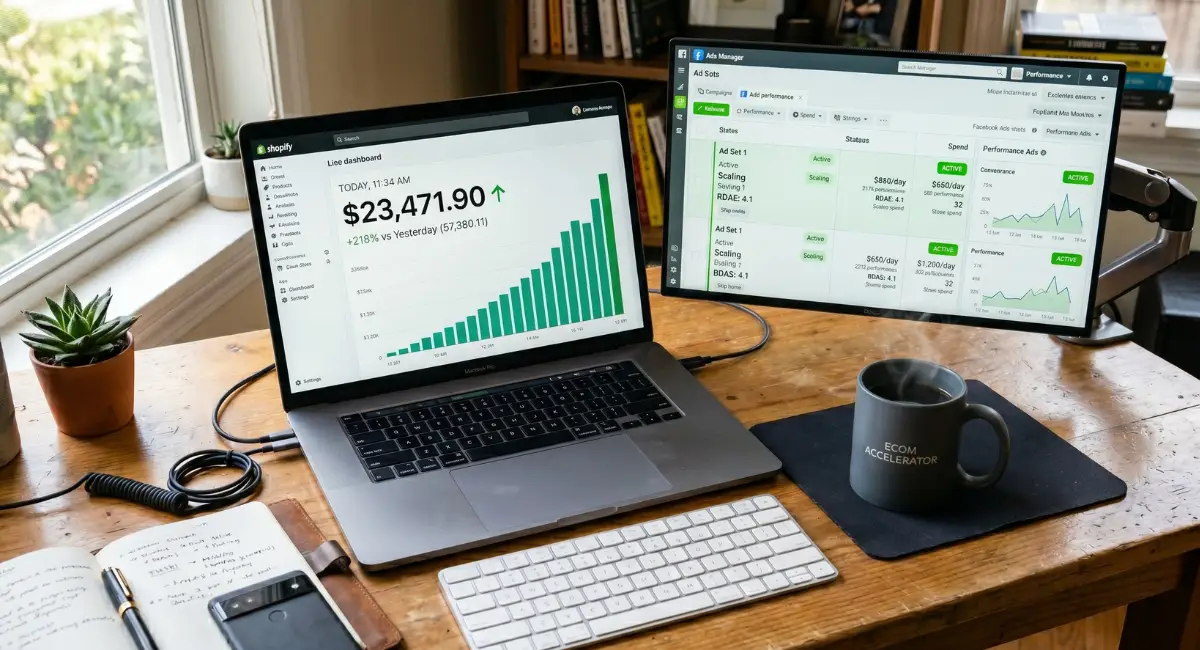
The method for obtaining a Facebook Agency ad account for large-budget campaigns does not involve purchasing directly from Meta, but rather is implemented through partnerships with Facebook-certified third-party partners or agencies. These entities are authorized to allocate high-trust ad accounts that are whitelisted and fully compliant with Meta's operational standards. Through this roadmap, the process of obtaining a Facebook Agency ad account for large-budget campaigns becomes more feasible and secure, particularly for businesses that need to rapidly scale their ad spend within a short period.
Agency accounts typically come with high or unlimited spending limits, faster ad approval mechanisms, and a significantly lower risk of being disabled compared to personal accounts, thereby establishing a stable foundation for large-budget campaigns to operate continuously.
Can a personal Facebook account be used for large-budget campaigns?
When advertising budgets escalate to hundreds of thousands or even millions of dollars per month, the focus shifts toward maintaining stable delivery, controlling systemic risks, and preserving cash flow throughout the scaling process. At this point, the necessity of a Facebook Agency ad account becomes a practical requirement rather than just a premium option.
Delivery pressure when budgets exceed conventional thresholds
When spending increases rapidly, personal ad accounts or standard BM accounts often reveal clear limitations. Meta’s delivery system tends to scrutinize accounts that suddenly surge their budgets more closely, especially if the spending history is insufficient or conversion signals are not strong enough. Many businesses encounter situations where ad delivery slows down, CPM increases abnormally, or spending limits are imposed right at the start of the scaling process.
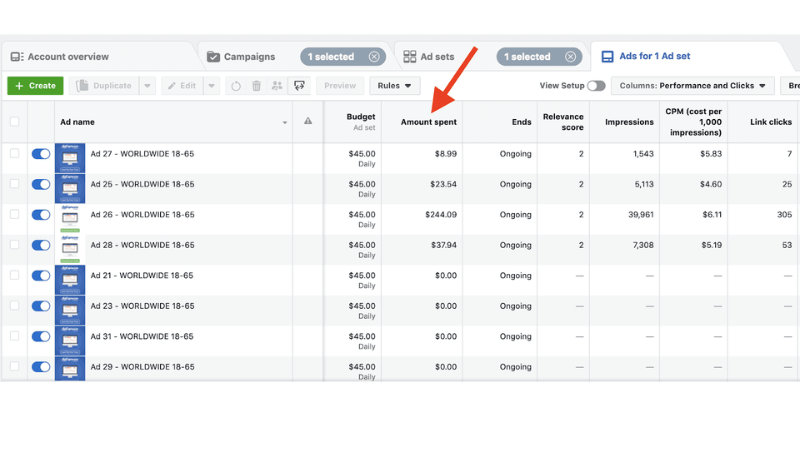
For new ad accounts or accounts with limited spending history, the daily spending limit typically starts at $50/day. This is a very common threshold and a significant bottleneck for many businesses looking to scale rapidly.
Personal accounts or self-created BM accounts typically must undergo a gradual process to increase their spending limits over time. Businesses may spend weeks or even months raising their spending caps, while market opportunities do not wait. For large-budget campaigns, this latency translates into lost potential revenue. Facebook does not allow for manual limit increases; instead, the system automatically adjusts the limits based on spending behavior.
Typically:
- After 3–5 days of consistent spending, successful payments, and no ad rejections → the spending limit may increase slightly.
- After 7–14 days, if the account maintains consistent spending, complies with all policies, and has no refunds or outstanding balances → the limit will continue to be expanded.
However, this process occurs in incremental stages; there are no sudden increases within just a few days. In contrast, Facebook Agency accounts are typically granted high spending limits from the outset, allowing businesses to deploy campaigns at their desired scale without being restricted by technical constraints.
System stability and risk factors
At a high spending scale, risk lies not only in ad performance but also in the potential for account disruptions. A sudden account suspension can cause the entire funnel to stagnate, leaving the sales team with a lead shortage and resulting in cash flow fragmentation.
With standard accounts, businesses are almost entirely dependent on Meta’s automated support systems or standard support chat, which are often slow and lack the capacity for deep intervention. Conversely, many Facebook Agencies have direct communication channels with Meta, enabling faster processes for appeals, account reinstatements, or resolving billing errors. In a large-budget environment, the speed of resolution is sometimes more critical than the ad cost itself, as every day of disruption leads to tangible revenue losses.
One of the reasons businesses hesitate is the service fee for using Agency accounts. However, when placed in correlation with budgets reaching hundreds of thousands of dollars, this fee typically represents only a small fraction compared to the benefits of stability, spending limits, and support. Many businesses accept this cost as a form of "operational insurance," in exchange for the ability to scale continuously without being disrupted by account risks.
Soc Lua Agency – The market-leading solution for scaling campaigns
Soc Lua Agency is positioned as a provider of systematic solutions, enabling businesses to access high-stability Facebook Agency ad accounts suitable for large-budget campaigns and long-term scaling strategies. Beyond merely providing ad accounts, Soc Lua’s model focuses on sustainable operations, strict policy compliance, and optimizing relationships within the Meta ecosystem.
The Facebook Agency account system is stratified based on trust levels
Instead of mass issuance, Soc Lua builds a Facebook Agency account system based on Business Manager trust stratification. Accounts are linked to BMs with clean spending histories, large budgets, and stable uptime, thereby maintaining a high trust score within the Meta system. This is a key factor in preventing delivery throttling, reducing checkpoint risks, and avoiding spending restrictions when budgets surge.
Operational experience demonstrates that accounts backed by a robust BM foundation are prioritized by Meta’s automated review process, particularly during aggressive budget scaling phases. Soc Lua does not merely rely on policy theory; we have deployed and maintained numerous Agency BMs that remained stable through periods of heightened censorship, thereby establishing a high-trust account resource pool.
An account provisioning mechanism aligned with business objectives
Instead of providing standalone accounts, Soc Lua evaluates the industry, funnel model, and budget plan before recommending the most suitable account type. This approach helps prevent the misuse of Agency accounts, which is a common cause of trust degradation or account restrictions after a short period of operation. A diverse inventory of advertising account resources, with multiple time zones and currencies
In many cases, allocating accounts based on time zones, currencies, and BM structures has shown clear effectiveness in maintaining a stable spending pace. This factor is often overlooked when businesses source Agency accounts on their own, yet it directly impacts the capacity for long-term scaling.
Technical support and incident management at the Agency level
Moving beyond account provisioning, Soc Lua maintains a dedicated technical support team with hands-on experience in resolving issues within the Meta advertising system. When incidents such as account restrictions, billing disruptions, or abnormal alerts occur, our response protocol is deployed to minimize campaign downtime.
Evidence shows that Agency accounts with structured support channels are typically processed faster than personal accounts, especially in situations requiring verification or appeals. Having an intermediary that understands account architecture and Meta's risk assessment helps businesses avoid impulsive decisions that could have a long-term impact on their advertising ecosystem.
Capacity for high-budget operations and sustainable scaling
Soc Lua focuses on supporting businesses in deploying large budgets with controlled precision, rather than merely unlocking high spending limits from the outset. BM2500 and BM5000 accounts are operated according to a roadmap aligned with conversion signals and backend data, ensuring Meta recognizes a pattern of stable spending behavior.
Evidence from real-world campaigns demonstrates that controlling the scaling pace and maintaining a consistent spending history have a direct impact on account stability. This is why many businesses, after transitioning to Agency accounts through Soc Lua, have seen a marked improvement in their ability to sustain continuous advertising and minimize disruptions during peak seasons.
Commitment to policy compliance and preservation of the advertising ecosystem
Soc Lua’s core commitment does not lie in promises of "policy evasion" or "unlimited spending," but rather in building a secure advertising ecosystem that adheres to Meta's policies. This approach ensures the long-term utility of accounts, rather than merely serving short-term objectives.
Acquiring sustainable Facebook Agency ad accounts based on compliance and standardized operations is becoming a decisive factor for businesses aiming to scale their Facebook advertising seriously.
Soc Lua’s operational methodology as a driver of quality
The method of renting a renting a Facebook Agency advertising account at Soc Lua is designed to deliver sustainable effectiveness for large-budget advertising campaigns. Soc Lua does not take a fast-run approach or apply aggressive interventions to advertising accounts. The entire workflow is built on principles of risk control, account stability maintenance, and gradual performance optimization based on real data. Each phase has clearly defined objectives and is measured by specific metrics, rather than relying on intuition or subjective experience.
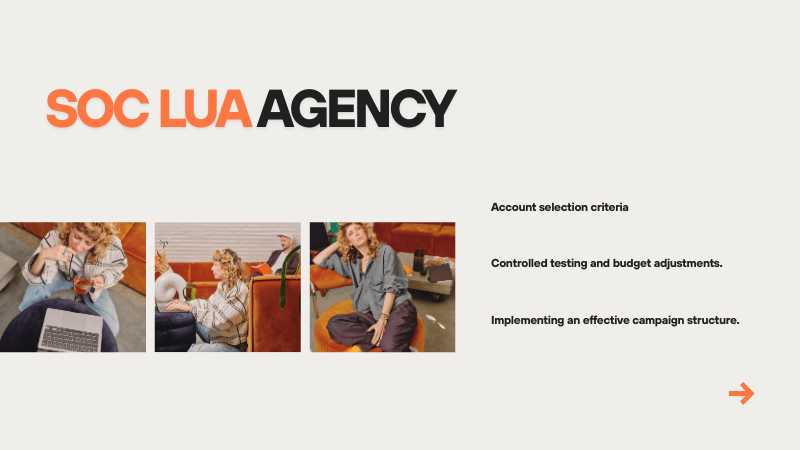
Selection criteria for ad accounts
From the outset, Soc Lua focuses on a comprehensive assessment of the account context:
- Spending history
- Current campaign structure
- Conversion data quality
- System stability levels
This is a crucial step to determine the current status of the account, identifying which elements can be leveraged and which require adjustment. The selection of the deployment strategy is not driven by a desire for rapid growth, but rather by the account's actual budget absorption capacity at that specific time.
Based on this evaluation process, Soc Lua clearly defines the initial scope of intervention, avoiding abrupt changes that could disrupt performance. This is particularly crucial for accounts with a proven track record, as Meta’s delivery system consistently prioritizes stability and consistency.
Controlled testing and budget adjustment
In the initial stage, budgets are typically slightly reduced to create a safe testing environment. During this period, metrics are closely monitored to accurately reflect traffic quality and input data. With this approach, the Cost Per Lead was maintained at $56 for the entire month, the Cost Per Appointment was $37, while the blended CAC reached $1,500 for a program priced at $5,750. These figures not only reflect cost efficiency but also demonstrate that the funnel system operates stably under controlled budget conditions. The budget reduction is not intended to diminish performance, but rather to build a clean and reliable data foundation for subsequent scaling decisions. This marks a significant departure from the common practice of many agencies that focus solely on pushing ad spend from the very beginning.
Deploying an effective campaign structure
Once a stable foundation is established, Soc Lua deploys three parallel campaigns, each corresponding to a distinct funnel. This organizational structure streamlines the delivery system, preventing data overlap and performance management difficulties. Each campaign is built with an independent set of creative assets, all of which are fresh content, produced and uploaded simultaneously to ensure consistency in both messaging and timing.
Although the initial ad spend for these new campaigns was not as high as the previous ones, performance showed a marked difference within just the final days of the month. All three campaigns achieved a blended CAC lower than the overall account average. Notably, one campaign recorded 30 conversions with a CAC of only $418, despite not having the highest budget. This accurately reflects our optimization philosophy: prioritizing actual efficiency over total ad spend.
Monitoring short-term data to validate long-term trends
When analyzing data from the last 7 days, the improvement trend continues to be validated. The budgets for new campaigns have increased incrementally, while the blended CAC decreased from $1,500 to $900. The CPL also dropped from $56 to $53. These fluctuations indicate that the account’s data is being progressively “purified,” the delivery system is learning the correct target audience, and the conversion backend is operating more efficiently.
Soc Lua always remains mindful of the slight discrepancies between the metrics displayed on the ad account and the backend data, as different tracking systems can lead to variations. However, the overall trend remains the priority factor in our decision-making process.
When taking over an existing account with a track record of results, Soc Lua never shuts down all active campaigns. Doing so often triggers a performance collapse or prolonged instability. Instead, new campaigns are deployed in parallel, with the budget gradually reallocated from underperforming campaigns to those showing stronger signals. The scaling process is executed incrementally, ensuring the account remains within the system's "safe zone" at all times.
Creative standardization and deep funnel optimization
Each ad set is organized using DCT or batch creative, featuring three variations of the same ad concept. These variations differ by only a single minor element, typically the "hook", enabling Meta to easily identify the top-performing combination and automatically allocate the budget. The ad copy always includes two sets of primary text and two headlines, synchronized with the messaging in the creative to ensure a seamless user experience.
Overcoming the limitations of the old method
Before Soc Lua’s involvement, previous agencies rarely tested new creatives, primarily recycling old assets despite a significant language barrier, using English scripts for a French-speaking business in Canada. Budgets were heavily concentrated in a few legacy campaigns, leading to high ad frequency and escalating CPM, CPL, and cost-per-appointment. By introducing fresh creatives tailored to the market’s language, reallocating the budget, and optimizing deeper into the funnel, shifting focus from leads to applications, while fully implementing conversion events such as appointments and sales, we provided Meta with higher-quality data signals. This, in turn, significantly improved the overall performance of the entire account.
Frequently Asked Questions
Meta assesses both simultaneously, but the business model is increasingly playing a decisive role. Industries with short customer lifecycles, high complaint rates, or non-transparent payment flows are flagged as high-risk, even when utilizing reputable Agency accounts. This explains why certain campaigns are strictly scrutinized despite using Agency accounts, while other industries can scale rapidly without facing any hurdles.
When transitioning to an Agency account, Meta’s machine learning system resets the evaluation weights at the account level, even if the Pixel and Fanpage data remain intact. If the previous structure contains "fatigued" campaigns, high ad frequency, or suboptimal budget allocation, the algorithm will require time to rebalance. A short-term performance dip does not reflect the account's quality; rather, it indicates a misalignment between the legacy structure and the new delivery mechanism. Understanding this is a prerequisite for sustainably leveraging Facebook Agency accounts for high-budget campaigns.