As digital marketing evolves, advertisers are no longer focusing solely on generating a high volume of leads, but are beginning to prioritize solutions that enhance lead quality and actual conversion potential from campaigns. Facebook has clearly identified the limitations of traditional lead generation ads on Facebook and introduced the conversion lead optimization feature specifically for advertising.
This feature enables the ad delivery system to distribute advertisements based on more nuanced quality signals, rather than simply optimizing for the volume of submitted forms. Consequently, businesses can reach users with higher levels of interest and intent while improving the overall performance of lead generation ads on Facebook in a sustainable and scalable manner. In this guide, we will analyze the core elements of this new optimization mechanism, as well as the correct implementation methods to fully leverage the advantages that Facebook provides for lead generation campaigns.
The nature of quality leads in Facebook Ads
Quality Leads in Facebook Ads are not a concept defined by the volume of forms collected or a low cost per lead. At a practical operational level, lead quality reflects the degree of alignment between the users who provide their information and the business's core objectives, ranging from conversion potential and life cycle value to their readiness to engage with the sales team. When this essence is correctly evaluated, the entire implementation of lead generation ads on Facebook changes, from optimization mindsets to budget allocation and performance measurement.
Determining from behavior, not just from forms
In Facebook Ads, this behavior does not stop at just filling out a form, but also includes the time spent interacting with the ad content, the level of information completion, and the steps they are willing to take after providing their data. Deeply optimized campaigns often record that leads who spend more time reading content, complete forms more thoroughly, and continue to engage with emails, calls, or follow up content have significantly higher conversion rates. This reflects that the essence of lead quality lies in the behavioral signals that Meta collects and learns from, rather than the volume of form submissions.
Tightly linked to the data received by the system
Facebook Ads operates based on feedback data. When the system only receives the "form fill" signal, the algorithm is forced to optimize for volume. Conversely, when businesses set up deeper events such as applications, scheduling, or sales closings, Meta begins to clearly understand the profile of high-value users. Accounts that fully implement tracking often record a higher initial cost per lead, but the cost per actual paying customer drops sharply after the machine learning phase. This is clear evidence that quality leads do not come from forcing the CPL down, but from providing the correct data so the algorithm can optimize for value.
When the messaging is too generic, Facebook tends to distribute to the groups most likely to engage, but not necessarily those with the potential to purchase. Conversely, campaigns that utilize clear qualifying messaging, expressing barriers regarding needs, budget, or commitment levels, typically generate a lower volume of leads but with distinctly higher quality. Practical implementation shows that accounts accepting "upfront filtering" will reduce the rate of fake leads, decrease pressure on sales teams, and improve the close rate per call.
The back-end funnel determines the true value of the lead
Quality leads cannot be separated from the funnel structure. A system that stops at a lead form without intermediate steps, such as applications, information confirmation, or content nurturing, will find it very difficult to classify which are truly potential leads. Conversely, multi-tiered funnels allow businesses to clearly observe the drop off at each stage, thereby accurately identifying the lead groups that generate revenue. Empirical data shows that when a funnel is designed to force users to make several small consecutive decisions, the final conversion rate increases, even though the number of top-of-funnel leads is lower compared to a simple funnel.
The decisive factor in budget scalability
At a small scale, businesses can accept average-quality leads. However, as budgets increase, every weakness in lead quality is amplified. Facebook Ads accounts capable of sustainable scaling are built on a foundation of high-quality leads, where every impression delivers good data to the algorithm. Campaigns that achieve this state typically maintain a stable CAC as budgets increase, instead of witnessing escalating costs due to the system searching for new users while lacking clear signals. This demonstrates that lead quality not only impacts short-term performance but also determines the long-term scalability of the entire advertising system.
Methods for optimizing Facebook Lead Ads to enhance conversion quality
Optimizing lead ads does not stop at collecting user information at a low cost, but lies in the ability to generate data "clean" enough for Meta to learn and distribute advertisements to the right group with a high probability of conversion. The entire effectiveness of lead generation ads on Facebook is determined by the funnel structure, the method of controlling input data, and how the ad account is trained according to the behavior of qualified leads.
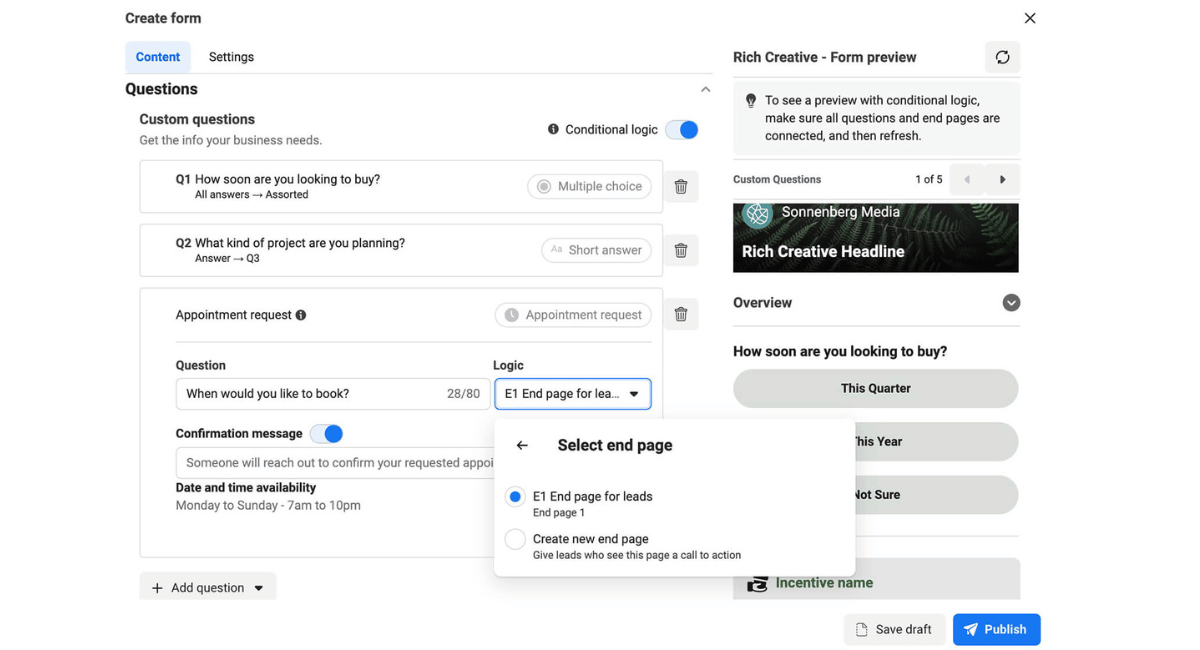
Step 1: Driving Lead ads to a Landing Page
The foundation of lead ad optimization lies in not using Facebook's native forms, but instead driving traffic to a dedicated landing page. The landing page acts as the first filtration layer, where users proactively provide information within a context where the content is fully controlled. This significantly helps reduce curiosity leads and low-cost leads that lack conversion potential, while establishing a premise for deeper downstream optimization steps.
The landing page must be constructed with clear messaging, synchronized with the advertisement, and focused on a single action: submitting information. This ensures that user behavior becomes consistent, creating a stable data signal for the tracking system.
Step 2: Post-Submission segmentation
After the user clicks the Submit button, the most critical part of the funnel begins. Instead of directing all leads to a single thank-you page, the system must utilize conditional logic to segment leads based on the information they have just provided. This is the core differentiator between quality-optimized lead ads and volume-driven lead ads.
Leads that meet the qualification criteria will be directed to a dedicated thank-you page for this specific group. This page displays a clear confirmation notice regarding their qualified status and provides instructions for the next steps. More importantly, the Facebook Pixel is installed here to send high-quality conversion data back to the ad account.
Conversely, leads that do not meet the criteria will be redirected to a different thank-you page, where the content is presented candidly and may suggest a more suitable resource or program. This page is not pixel-tagged, meaning Meta does not receive any signals from this low-quality lead group.
Step 3: Training the Pixel with clean data
When only qualified leads trigger the pixel, the advertising system begins to learn based on the behavior of high-value user groups. Over time, the algorithm will prioritize distributing ads to individuals with characteristics similar to this group, rather than optimizing for the simple act of submission.
Empirical evidence shows that when applying a two-layer lead filtering model, the cost per lead may not decrease immediately, but the cost per appointment, cost per call, and overall CAC typically improve significantly after several data learning cycles. This is the distinction between surface-level optimization and optimization based on business logic.
Step 4: Campaign and ad set structure
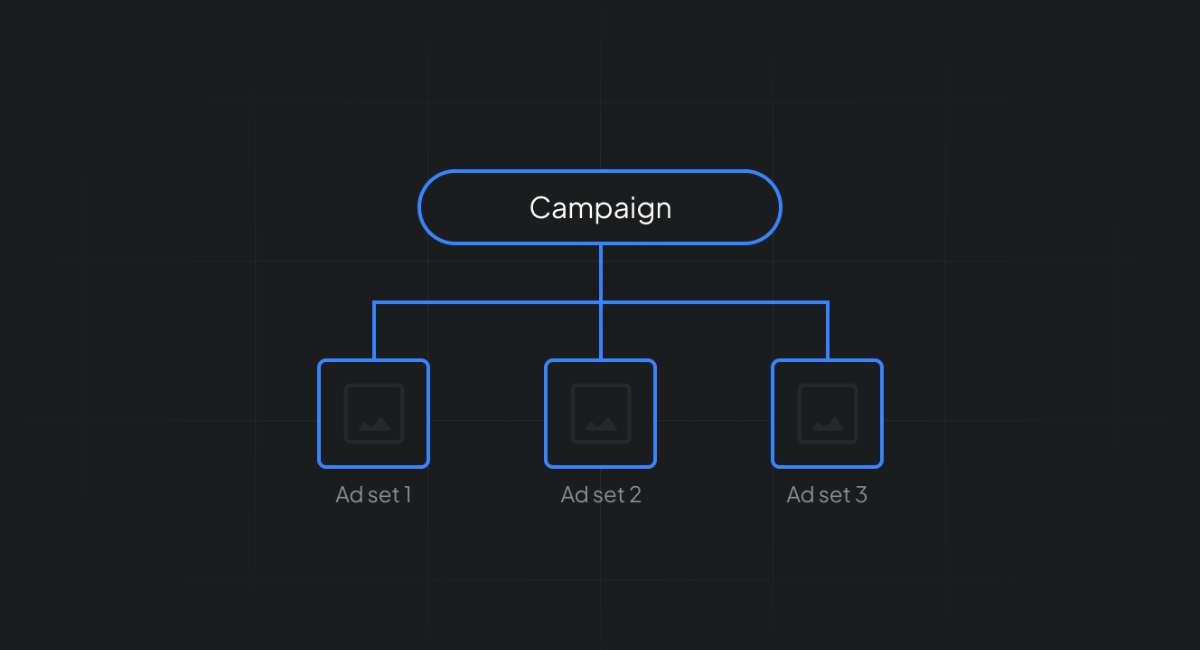
Once the funnel is ready, the ad account must be designed to support a stable data learning process. The Lead Generation campaign is set up with the conversion location as the website, as traffic is driven to a landing page. The optimization goal is leads, but in essence, the system is learning based on the pixel installed on the qualified thank you page.
Each ad set represents a unique, non-overlapping concept. Within each ad set, use only three creatives, keeping the hook and messaging constant while changing only a single variable, typically the image or video. This approach allows for the precise identification of factors influencing the user's scroll-stop ability, while simultaneously enabling Meta to consolidate the budget into the most effective combination.
Step 5: Budget management and creative lifecycle
Budgets are not allocated broadly but are shifted based on performance. Ad sets with a CPL exceeding the target threshold within 7 days window and that have spent sufficient budget will be eliminated. Ad sets that maintain a stable CPL will continue to run and be scaled gradually.
In large accounts, it is normal for a campaign to exist for many years with hundreds of ad sets. The majority of ad sets are no longer active, but their historical data still contributes to training the algorithm. Budgets are typically adjusted based on the data from the last 3 days, with a margin of approximately 20%, prioritizing maintaining pressure to force the creative system and funnel to continuously improve.
Step 6: Post conversion lead nurturing
Qualified leads do not automatically convert into customers without supporting content. In the product-aware stage, users need to be provided with evidence, objection handling, and trust reinforcement. Engagement or video views campaigns targeting the lead group from the last 7 days help complete this conversion lifecycle.
These campaigns require no CTA and no links, focusing instead on distributing in-depth content with sufficiently high frequency. When combined with email automation and a closely following sales team, the entire Facebook lead advertising system begins to operate as a high-quality data generation engine, rather than just a form collection tool.
Frequently Asked Questions
Landing pages are not merely lead collection points but tools for controlling user behavior. When users are willing to leave Facebook, read content, and proactively submit information, this behavior filters out the majority of "curious" leads. Data from a landing page reflects a higher level of commitment, allowing the Pixel to learn from high-intent signals. Although the surface-level conversion rate is lower than that of native forms, the input data quality for the algorithm is superior, leading to better conversion efficiency at the bottom of the funnel.
Meta does not "understand" what constitutes a good or bad lead; it only learns from the data sent back. When the Pixel triggers only for qualified leads, the algorithm is forced to find users with behaviors, demographics, and contexts similar to this group. Over time, the delivery system will automatically exclude user groups that tend to submit forms but do not meet business criteria. This is how the optimization focus shifts from action to value, something the majority of Lead Ads accounts fail to achieve.