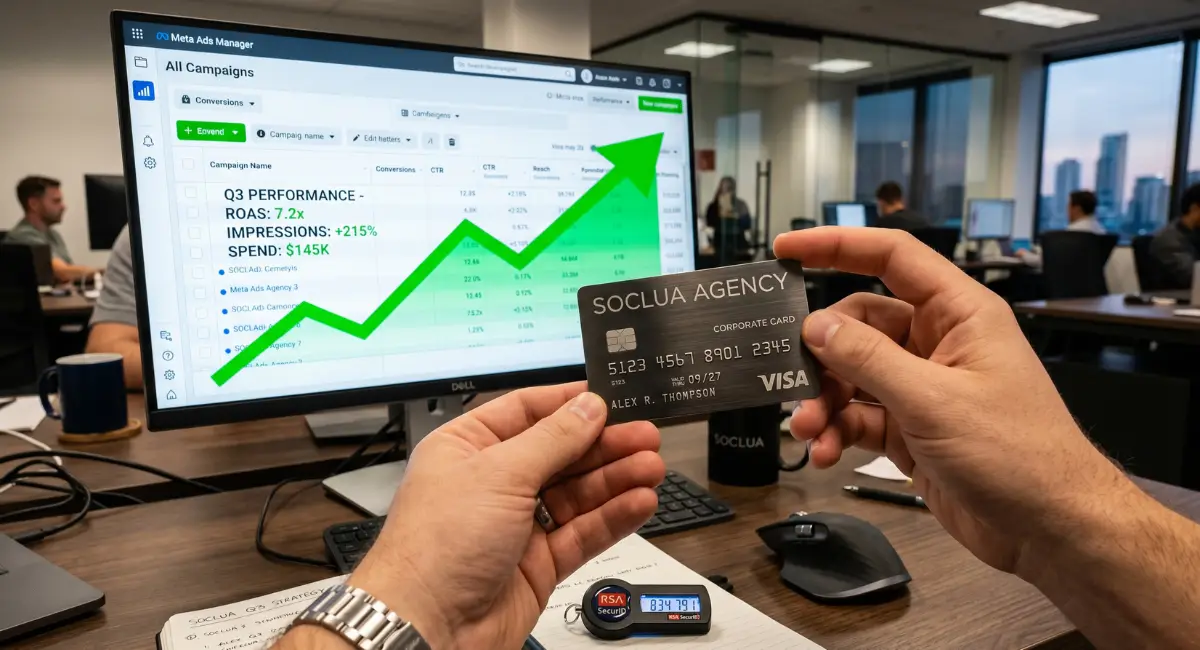
The comparison between Meta Agency ad accounts and personal ad accounts has always been a subject of significant debate among businesses, advertisers, and agencies managing large-scale budgets. The difference lies not only in spending limits or feature accessibility but also in administrative structure, stability, and risk management capabilities during long-term campaigns. Meta Agency Ad Accounts are typically built on high-level Business Manager platforms, offering superior trust scores, flexible budget handling, and dedicated priority support from the system. In contrast, Personal Ad Accounts are suitable for small-scale needs but are prone to policy restrictions, spending caps, or the risk of disablement when scaling rapidly. A comprehensive comparison must be evaluated based on operational criteria, scalability, ad asset security, and the direct impact on ROI performance.
Tài khoản quảng cáo Facebook cá nhân
Personal ad accounts are typically the starting point for most advertisers when approaching the Facebook Business ecosystem. Their simple structure, quick setup process, and direct link to personal profiles allow beginners to launch campaigns in a short period without building a complex administrative infrastructure. However, behind this initial convenience are systemic limitations, particularly as budgets begin to scale and campaigns demand long-term stability.

Ownership mechanism linked to personal profiles
Personal ad accounts are created and controlled directly by a personal Facebook profile. This means that all advertising assets, including fan pages, pixels, ad accounts, and payment history, are directly affected by the status of that profile. When a personal profile encounters identity verification issues, policy violations, or feature restrictions, the associated ad account is impacted accordingly.
This model is suitable for small-scale individual businesses or freelancers who self-operate their campaigns. However, from a digital asset management perspective, depending on a single individual creates a concentrated risk. In many practical cases, when personnel leave the organization or lose access to their personal accounts, the process of transferring advertising assets becomes complicated. This indicates that the ownership mechanism of personal accounts favors short-term flexibility over a sustainable structure.
Spending limit and stability
In the initial stage, personal accounts are typically granted relatively low spending limits. Meta's system relies on payment history, account trust scores, and policy compliance to gradually increase the budget ceiling. When spending remains at a few million to tens of millions of VND per month, the difference is not yet significant. However, as the budget scales up sharply, billing thresholds and automated review mechanisms begin to affect the speed of campaign scaling.
Delivery stability is also a noteworthy factor. New personal accounts or those without a long-standing history are susceptible to ad delivery limitations when there are sudden budget changes or continuous adjustments to the campaign structure. Signals such as aggressive budget scaling, changing payment methods, or multiple ad creative edits can trigger the automated review system. The common consequences include:
- Paused delivery
- Additional verification requirements
- Reduction in account trust score
These disruptions directly impact performance and ROI, especially for campaigns that rely on continuity.
Risk of account disablement when scaling budgets
As spending scales up, personal accounts enter a higher risk zone. Meta's control algorithms evaluate not only the ad content but also the account's operational behavior. Accounts with a short history, rapid spending increases, or sudden spikes in activity are susceptible to being flagged for automated review.
Operational reality shows many cases where personal accounts are disabled due to ad policy violations, even when the error stems from technical issues or content misinterpretation. The appeal process is often prolonged, relying on standard support forms and lacking direct communication channels. When a campaign is running on a large budget, a single disablement can cause the entire sales system to be disrupted.
This reflects a core characteristic: personal accounts are not designed to withstand high budget pressure over long periods. They are more suited for testing models, product validation, or initial market entry stages rather than large-scale operations.
Limited support from Meta
The support level for personal accounts is typically at a standard tier. Advertisers primarily access assistance through the help center, contact forms, or automated chatbots. Response times depend on the severity of the issue and the current account status.
When issues related to payments, advertising restrictions, or identity verification occur, access to direct support teams is quite limited. This leads to prolonged resolution processes, which affect campaign timelines. With a small budget, the impact may be negligible. However, as spending increases and revenue becomes heavily dependent on advertising, support limitations become a critical variable in the risk management equation.
Personal ad accounts effectively meet the requirements for quick setup, low costs, and simple structures. However, when objectives shift toward aggressive growth, systematic risk control, and long-term performance optimization, the limitations regarding ownership, spending limits, stability, and technical support become increasingly apparent.
Agency ad accounts
Meta Facebook Agency ad accounts are designed for professional operational environments, characterized by large budgets, multiple concurrent campaigns, and high-level risk control requirements.
Administrative access under Business Manager
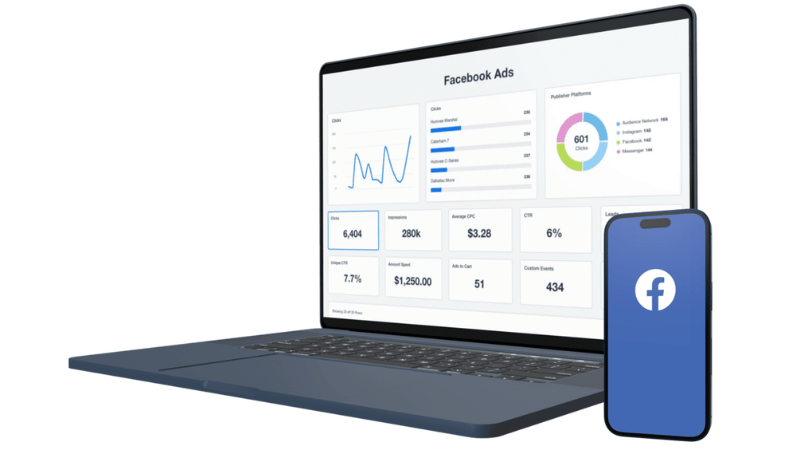
Agency accounts are typically managed through a high-level Business Manager, where advertising assets are decoupled from personal profiles. Fan pages, pixels, ad accounts, payment methods, and customer lists are all housed under a clear corporate structure. This provides three key advantages:
- Flexible role-based access control
- Asset protection during personnel changes
- Tiered administrative access control
In operational practice, when an employee leaves the company, access permissions can be revoked without affecting the entire system. Ad history, pixel data, and custom audiences remain preserved. This mechanism minimizes the risk of individual dependency and establishes a foundation for long-term growth.
Business Manager also allows for the management of multiple ad accounts under a single structure, supporting the deployment of multi-market or multi-brand campaigns without the need to rebuild from scratch.
Flexible budget limits
One of the distinct differences of Agency accounts is the ability to handle large budgets without facing abrupt spending limits. The system evaluates reliability based on payment history, operational scale, and policy compliance. Once a certain trust threshold is reached, spending limits can be significantly increased, facilitating rapid campaign scaling.
This flexibility is particularly crucial when:
- Scaling budgets for peak seasons
- New market expansion
- Large-scale simultaneous campaign deployment
Instead of being hindered by low payment thresholds or repetitive verification requests, Agency accounts tend to maintain a steady spending flow. This directly impacts algorithmic optimization, as ads require continuous data to learn and improve performance.
Ad delivery system reliability
Meta Agency ad accounts typically possess a long-standing operational history, standardized structures, and rigorous policy compliance processes. Consequently, the risk of delivery restrictions or abrupt deactivation is significantly lower compared to new or unestablished accounts.
Meta's system evaluates accounts based on various signals, such as:
- Ad complaint rate
- Policy violation history
- Abnormal campaign modification behavior
- Content consistency level
As these signals stabilize over time, the algorithm tends to prioritize delivery due to the low risk level. In the context of large budgets, even a single interruption can cause significant damage. Therefore, reliability becomes a strategic factor, rather than just a technical advantage.
Priority support channels
A key characteristic of Agency accounts is access to priority support channels from Meta. Depending on the spending scale and level of partnership, businesses may be connected with dedicated support teams or account representatives. Faster response times, deeper intervention levels, and the ability to resolve issues directly help minimize the risk of disruption.
When issues related to billing, ad restrictions, or system verification occur, having a direct support channel makes a significant difference. Instead of waiting for processing through general forms, Agency accounts can receive strategic consulting, guidance on campaign structure optimization, or appeal support in a much shorter timeframe.
At a professional operational scale, advertising is not merely a marketing tool but a revenue growth engine. Therefore, the account platform must meet standards for governance, budgeting, system stability, and technical support. The Agency model was established to serve these exact needs, where advertising is managed as a part of the corporate infrastructure rather than as an independent activity.
Which type of account should be used for rapid growth?
If the objective is to achieve high-speed quarterly or annual growth, the choice of account must focus on the sustainability of ad cash flow, the capacity to handle large data volumes, and compatibility with long-term strategies. In this regard, Agency accounts offer a clear advantage compared to self-managed personal accounts.
Multi-asset integration capability for expansion strategies
As scale increases, the advertising ecosystem consists of more than just a single ad account. Businesses often have to manage multiple Fanpages, multiple Pixels, and multiple auxiliary ad accounts for each specific market or product line.
Meta Agency ad accounts enable the linking and centralized management of all assets under a unified structure. Instead of operating each account in isolation, the Agency model creates a centralized system, allowing expansion strategies to be executed in a controlled manner without losing accumulated data.
- Synchronize data across campaigns without fragmenting audience segments
- Leveraging conversion data to optimize new campaigns
- Minimizing digital asset ownership conflicts
Optimizing ad cash flow at scale
Fast-growing businesses often require flexibility in billing cycles, invoicing methods, and cost reconciliation capabilities. Meta Agency ad accounts are typically established with more flexible payment mechanisms, suitable for high-volume spending. This provides several clear advantages:
- Easing cash flow pressure during rapid scaling
- Facilitating cost control on a per-campaign basis
- Compatible with internal accounting and reporting systems
Compatibility with professional operating models
Rapid growth is always accompanied by workforce expansion. Marketing teams, content teams, and data analytics teams all require access to the advertising system. If the account platform lacks professionalism, the risk of operational errors will increase exponentially. The Agency model allows for granular permission settings by role, department, and management level:
- Controlling budget modification activities
- Restricting unauthorized access to customer data
- Protecting advertising assets during personnel turnover
The ability to maintain system trust during aggressive growth
The ad delivery algorithm evaluates accounts based on policy compliance history, engagement rates, and content stability. Fast-growing businesses often test multiple ad formats and diverse audience segments, leading to high operational frequency.
Meta Agency ad accounts, with their history of professional operation and standardized corporate structure, typically establish a higher level of trust within the system. This supports the maintenance of stable delivery when deploying large-scale campaigns, especially in highly competitive industries.
Rapid development requires a platform robust enough to support long-term strategies. When considering asset integration capabilities, cash flow management, team operations, and the maintenance of system authority, the Agency account model is more suitable for achieving aggressive and sustainable growth objectives.
Soc Lua – The premier provider of top-tier ad accounts
The premier ad account provider must possess a diverse inventory of high-limit accounts, specialized Business Manager structures, and a flexible pool of accounts spanning multiple time zones. Among Agency account providers, Soc Lua is highly regarded for its ability to simultaneously meet all of these criteria.
BM2500 and BM5000 systems tailored for high-budget operations
Soc Lua provides Business Manager structures such as Facebook BM2500 accounts and formats suitable for businesses deploying high budgets and managing multiple ad accounts simultaneously. Soc Lua focuses on providing Agency accounts with clear Business Manager structures, spending limits tailored for large budgets, and transparent operational histories. In practice, many businesses encounter ad interruptions when abruptly increasing budgets or when the system triggers high-risk assessments.
As budgets grow aggressively month-over-month, BM2500 or BM5000 structures ensure stable system operations without the need for mid-way restructuring, guaranteeing that advertising data remains continuous and uninterrupted.
Multi-timezone account inventory for international market coverage
A notable differentiator of ours is our multi-timezone account inventory, which is suitable for various countries worldwide. For businesses deploying ads in the US, Europe, or Southeast Asia, the account's timezone directly impacts budget reset timing and reporting cycles.
A multi-timezone account inventory facilitates:
- Synchronizing delivery schedules with target markets
- More precise daily budget control
- Optimizing campaigns for high-conversion windows in each specific country
The ability to select the appropriate timezone from the outset helps businesses mitigate data conflicts and avoid complex technical adjustments once operating at scale.
Technical troubleshooting and risk management support
In advertising operations, issues can arise at any time, including account restrictions, content flags, payment failures, or delivery disruptions. Delayed response times directly result in lost revenue. Soc Lua’s expert team provides 24/7 support through a structured incident management process, which includes account status monitoring, content compliance consulting, and appeal assistance whenever restrictions occur.
An operational model that prioritizes risk management, ensures delivery continuity, and optimizes budget scalability has established a distinct competitive advantage. It is the combination of technical expertise, in-depth support protocols, and a strategic partnership mindset that consistently earns Soc Lua Agency the highest ratings among ad account providers catering to fast and stable growth objectives.
Frequently Asked Questions
Technically, an individual can create multiple ad accounts based on specific needs or markets. However, from a strategic standpoint, this is not equivalent to an Agency account. An Agency account (via a standard Business Manager) provides a centralized structure for multi-asset management, team-based permissioning, centralized customer data storage, and systemic risk control. Utilizing 'multiple personal accounts' is merely a temporary workaround; it cannot replace the centralized structure and strategic governance of an Agency account.
Not necessarily, but it is worth considering. For small businesses, personal accounts offer simplicity, low costs, and do not require complex structures. If the advertising budget is low, or the objective is product testing or targeting a niche market, a personal account can suffice.