Facebook advertising effectiveness no longer depends on large budgets; instead, it lies in the ability to control and leverage data accurately. As the advertising ecosystem becomes increasingly automated, mastering Facebook Business ads manager becomes a key factor for businesses to proactively adjust strategies, optimize costs, and increase actual profits. From account structure and metric tracking to correctly interpreting machine learning signals, every action directly impacts ROI. Instead of running ads based on subjective experience, advertisers should approach Facebook Business ads manager as a performance management system, where data drives decisions and strategies are continuously optimized in accordance with 2026 business goals.
The importance of ROI in Facebook Ads manager
ROI is not merely a measurement metric; it is the central axis for evaluating the total value of advertising activities within Facebook Ads manager. As budgets grow larger, the Meta ecosystem becomes more complex, and algorithms continuously change, ROI becomes the sole anchor helping businesses distinguish between genuine growth and superficial growth. From a management perspective, every decision regarding account structure, campaign selection, budget allocation, or creative optimization must be referenced against ROI to avoid falling into the state of "generating numbers without generating profit."
The true measure of advertising effectiveness
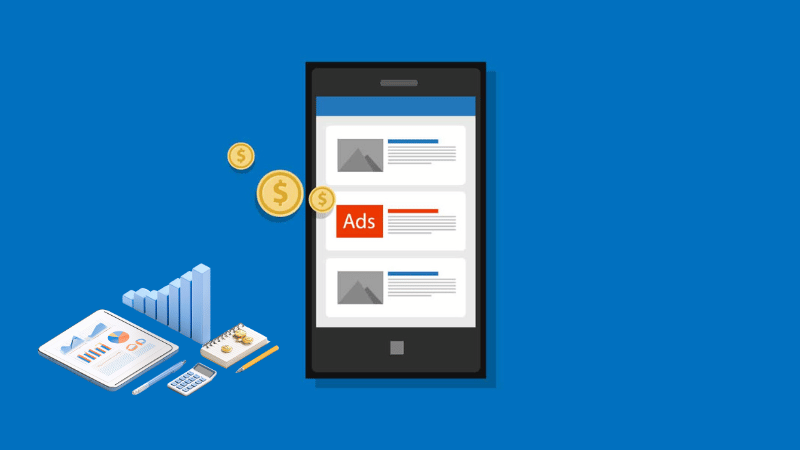
In Facebook Ads Manager, the system provides a wide range of metrics such as CPC, CPM, CTR, number of conversions, and cost per result. However, these metrics only reflect individual slices of the advertising journey. ROI is the aggregate metric that demonstrates the correlation between the costs incurred and the business value generated.
Actual implementation shows that many campaigns have low CPM and high CTR, yet result in a negative ROI due to poor post click conversion rates or order values that are insufficient to cover costs. Conversely, there are campaigns with higher than average CPM that still achieve superior ROI by targeting the right audience willing to pay and having a deeply optimized conversion journey. This confirms that ROI is a tool for eliminating data noise, forcing advertisers to look directly at business performance instead of being swayed by intermediary metrics.
Orientation for data usage in Ads Manager
Facebook Ads Manager does not lack data; the issue lies in how to read and select the appropriate data. When ROI is placed at the center, reports in Ads Manager are no longer viewed in isolation. Metrics such as frequency, cost per event, conversion rates at each funnel stage, or conversion value by traffic source begin to have clearer meaning.
Advertisers tend to group data by profitability, thereby discovering sustainable operating models, such as ad sets that deliver stable ROI despite modest volume, or creative sets with high ROI that are limited by budget. This approach helps Ads Manager become a strategic analysis tool rather than just a place to toggle campaigns on and off.
Direct impact on campaign structure
A Facebook Ads account optimized around ROI typically has a distinctly different structure compared to an account that focuses solely on costs or conversion volume. Instead of spreading the budget across multiple ad sets to find cheap CPMs, the budget is strategically concentrated on campaign groups that have proven their ability to generate a positive ROI.
In operational practice, many businesses maintain a very low number of active ad sets compared to the total number ever tested, yet each remaining ad set meets the minimum ROI criteria over a sufficiently long period. This allocation method allows the budget to be used as a profitable lever rather than a prolonged experimental expense.
Strategic decisions for creative and messaging optimization
Ad creatives are often evaluated by their level of engagement, but in Facebook Ads Manager, the true value of a creative lies in the ROI it generates. Extensive implementation data shows that ad sets with high engagement do not necessarily yield proportional revenue, whereas direct creatives that focus on core benefits and address objections often produce superior ROI. When ROI is closely tracked, the creative optimization process is no longer based on intuition or trends, but on the actual profitability of each message, content angle, and display format.
The foundation for scaling decisions and risk control
Scaling budgets in Facebook Ads always carries risks, especially for accounts without a sufficiently deep data foundation. ROI acts as a control mechanism, helping businesses determine safety thresholds before expanding spend. Practice shows that campaigns scaled based on stable ROI typically maintain better performance compared to campaigns based solely on low costs or high short-term volume. ROI also helps detect early signs of performance decay, allowing for timely adjustments before the budget is burned at a large scale. In the context of increasingly fierce competition, the ability to control risk through ROI is the long-term advantage of professionally managed Facebook Ads accounts.
Practical ROI optimization in Facebook Business operations
Optimizing ROI in Facebook Business does not start with increasing budgets or duplicating campaigns, but rather with designing the entire advertising system so that the algorithm has enough space to learn, enough quality data, and enough signals aligned with the objective. When ROI is viewed as the central metric, every decision in Ads Manager, from targeting, creative, and Pixel to the backend funnel, must serve actual profitability.
Step 1: Expanding cold audiences to release the algorithm
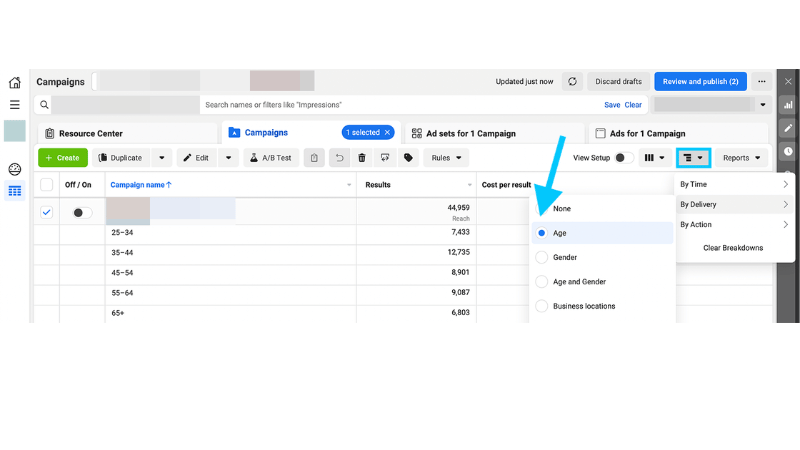
In Facebook Business, targeting a sufficiently broad cold audience is a prerequisite for the algorithm to function according to its true nature. For local campaigns, a broad audience should reach a minimum of approximately 25,000 people, while for national campaigns, the audience size usually needs to be in the millions. Cold audiences here are understood as individuals who have never interacted with the brand and have had no prior touchpoints.

Actual operational practice shows that targeting too deeply into interests, behaviors, and detailed demographics no longer provides the advantage it once did. Now that the algorithm is capable of analyzing ad copy, images, videos, and landing page URLs, placing too many constraints on targeting only stifles the learning process. ROI decreases not because the ad is poor, but because Facebook lacks the space to find the most suitable group of people.
In ad set configuration, two approaches have been proven effective in terms of ROI. First is to retain only high-certainty demographic criteria such as gender, location, and age. Second is to utilize Lookalike Audiences built from paid customer data. A 1% Lookalike based on a list of at least 1,000 actual customers helps the algorithm reach groups with similar purchasing behaviors, thereby significantly improving cost per result and the final conversion rate.
Step 2: Advertising messages centered on customer value
After targeting has been released, the next factor directly influencing ROI is the ad creative. In Facebook Business, creative is not just an image or a video, but the entire message that the algorithm uses to determine who should see that advertisement.
Business-centric ads often focus on achievements, scale, awards, or short-term sales announcements. In contrast, customer-centric ads place the emphasis on the results users achieve, the barriers removed for them, or the savings in time and effort. From the management data of numerous accounts, this mindset shift alone creates significant differences in CTR, cost per conversion, and overall ROI.
During the implementation process, clearly listing core benefits, the problems customers are facing, and their state after using the product helps the algorithm accurately identify groups with real intent, rather than attracting curiosity driven clicks.
Step 3: Optimizing the Facebook Pixel based on final business objectives
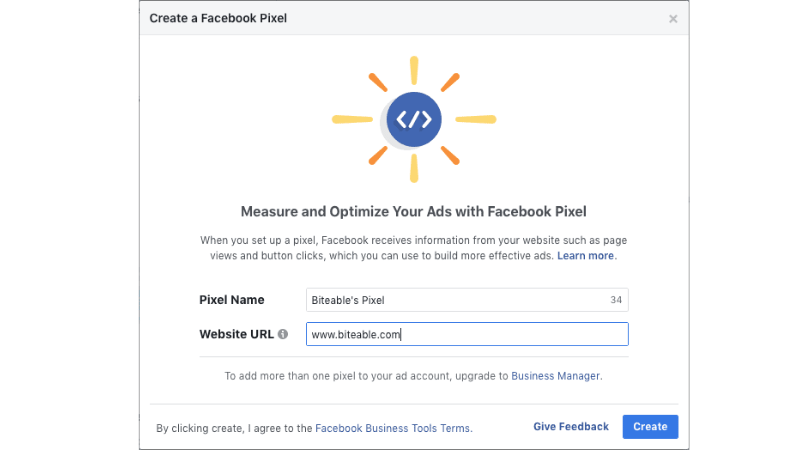
ROI is only truly optimized when the Facebook Pixel is configured to learn the specific behaviors that deliver value. In many Facebook Business accounts, the Pixel is still optimizing for Leads, while the actual objective is appointments, contracts, or paid customers. This misalignment causes the algorithm to continuously deliver cheap leads that lack the potential for deep conversion.
Creating custom conversions for decisive actions, such as booking an appointment or completing a payment, helps Facebook clearly understand what constitutes high-quality signals. The Pixel then no longer learns from superficial behaviors but focuses on groups of people ready to reach the final stage of the funnel, thereby sustainably improving ROI.
Step 4: Building a post-ad nurturing and tracking system
ROI in Facebook Business does not end at the click or the form submission. Most of the value is determined in the post-ad stage, where leads are nurtured, qualified, and converted. An effective sales system typically includes a sequence of emails and messages tiered by behavior, post-form qualification surveys, segmentation of qualified and unqualified leads, and retargeting campaigns throughout the funnel.
When the entire journey is tracked and measured, Facebook gains additional data to identify who reaches the end of the funnel, thereby continuing to optimize ad delivery to similar audiences. In this context, data is not just a measurement tool but becomes a direct lever for systematically increasing ROI.
Frequently Asked Questions
ROI fluctuations often stem from changes in user behavior, auction competition, and how the machine learning system reallocates budget. When core metrics such as CPM, frequency, or conversion quality are not closely monitored, campaigns can easily fall into a state where costs increase while the value returned decreases. Mastering Ads Manager helps detect these signals early for timely adjustments.
Cost only reflects the surface. To maximize ROI, it is necessary to monitor the relationship between cost and the value returned, including the qualified conversion rate, average order value, customer lifetime value, and repeat frequency. Ads Manager provides full data, but selecting the right core metrics is what enables precise optimization decisions.